


新三国演义
Know All About Avatar: Fire and Ash's Varang, Played By Charlie Chaplin's Granddaughter Oona Chaplin_我的网站

一 |
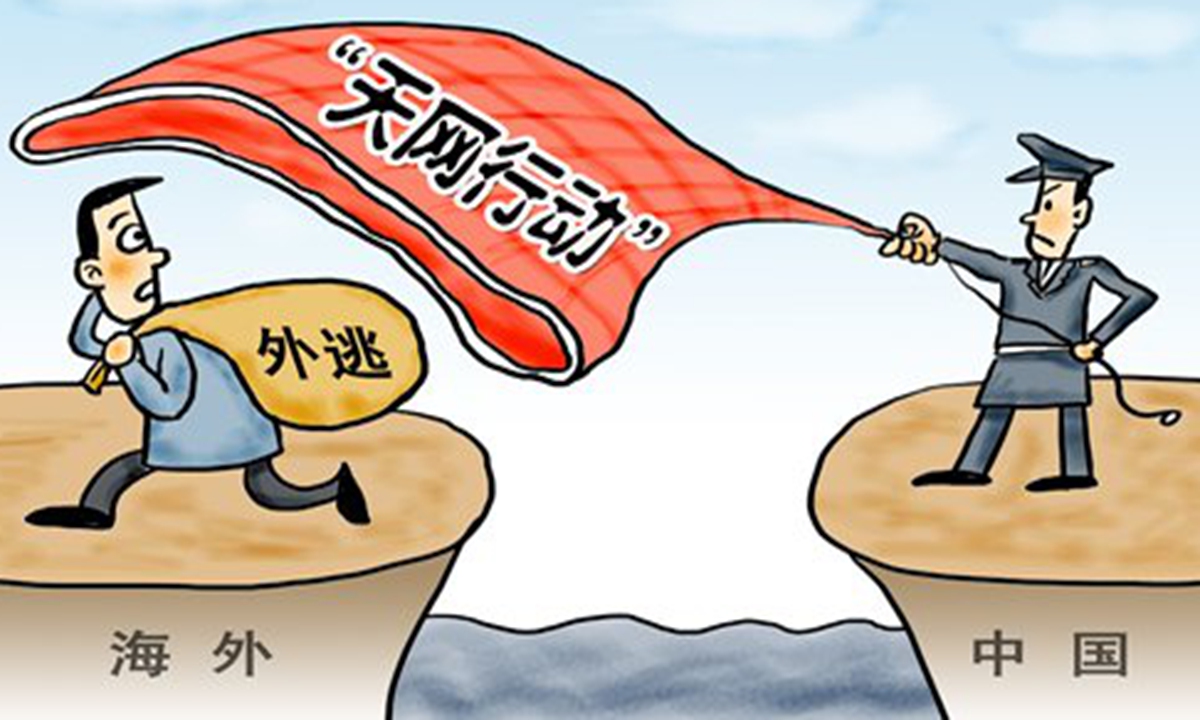
Chinese lawmakers began reviewing a draft law on combating cross-border corruption on Tuesday, a legislation which experts believe would help close legal gaps in investigating overseas corruption, pursuing fugitives and recovering illicit assets, while strengthening international cooperation and corporate compliance.
The draft was submitted for its first reading to the ongoing session of the Standing Committee of the National People's Congress, the country's top legislature, per Xinhua News Agency.
Huo Zhengxin, a professor at the China University of Political Science and Law, told the Global Times that the draft law represents a dedicated piece of legislation within China's anti-corruption legal framework and a major step forward in the country's law-based governance of foreign-related affairs. It will fill a legislative gap in combating cross-border corruption, Huo said.
As Chinese companies expand business overseas, cross-border corruption cases face challenges in obtaining evidence abroad, pursuing fugitives and recovering illicit assets. Existing anti-corruption laws have faced limitations in addressing such cases involving foreign affairs, making such dedicated legislation necessary, Huo said.
Structured into six chapters and 47 articles, the draft sets out the principles, scope and key provisions underpinning China's efforts to combat cross-border corruption. It also defines relevant operational mechanisms and institutional responsibilities, and seeks to strengthen case handling and international cooperation.
The draft further clarifies enterprises' obligations regarding integrity and compliance, and specifies legal liabilities for violations.
As one of the experts involved in drafting the legislation, Huo said a key innovation of the draft is to strengthen international cooperation and corporate integrity and compliance obligations. As evidence, suspects and illicit assets in cross-border corruption cases are often located overseas, the draft provides mechanisms including extradition, mutual legal assistance and repatriation, while aligning with relevant rules under the UN Convention against Corruption (UNCAC), said the expert.
The draft also makes clear that Chinese companies operating overseas, including both state-owned and private enterprises, have legal obligations to uphold integrity and compliance with domestic laws, Huo said.
The legislation would also codify practices accumulated through China's past campaigns against cross-border corruption, such as Sky Net and Fox Hunt operations, turning them into a more systematic legal framework and strengthening the law's deterrent effect, according to Huo.
The draft law is a practical step to regulate the development of cross-border businesses and help build a world-class business environment aligned with market principles, the rule of law and international standards, Xinhua noted.
It is also expected to expand the legal tools available to combat cross-border corruption and help address challenges in detecting corruption, collecting evidence, recovering illicit assets and securing convictions, according to the report.
In January, CCTV News reported on the case of a former senior executive of China National Offshore Oil Corporation, who was accused of accepting large amounts of bribes that were concealed overseas, with a businessman allegedly acting as a "front" to collect the illicit payments.
The draft's explicit corporate integrity and compliance requirements would make it harder for individuals to disguise bribery and other corrupt practices through overseas projects in an attempt to circumvent domestic oversight, while further clarifying the extraterritorial reach of China's anti-corruption laws, Huo said.
The draft also contains provisions to counter the use of foreign countries' domestic anti-corruption laws to exercise "long-arm jurisdiction" over Chinese companies, which Huo described as another important innovation in China's foreign-related legal framework.
China has been deepening its efforts in international anti-corruption cooperation, with 963 corrupt fugitives repatriated to the country in 2025, according to a work report from the country's top anti-graft body, Xinhua reported.
。 As the countdown intensifies for James Cameron’s Avatar: Fire and Ash, one name is sparking growing intrigue, and it is Varang. She isn’t merely a new character; she is the beating heart of the frenzy, the mystery and the towering anticipation surrounding Cameron’s latest chapter. In Avatar: Fire and Ash, audiences will journey deeper into Pandora than ever before, encountering an entirely new civilisation, the Mangkwan clan, also known as the Ash People. Fierce, resilient and shaped by a life of unrelenting hardship, this clan offers a raw and unfiltered window into Pandora’s darker, more complex corners. At their helm stands Varang, a leader forged by suffering, fuelled by purpose, and destined to redefine the emotional stakes of the saga. Bringing Varang to life is Oona Chaplin, granddaughter of the iconic Charlie Chaplin. Varang is not crafted simply as an antagonist or narrative counterpoint, she is a force of nature. Talking about her character, she said, "I never saw her as a villain, and I don't think you say that as well, you're not the villain, you know, it's a little complicated, but I think both of these characters are also very principled. For me, you know, it was a great revelation to have the conversations with Jim around this theme where she tells a little bit about her biography, her kind of origin story, why she is the way she is. And it struck me as like she's actually a very human character, because the depth of trauma that comes from the separation from the connection to nature, which, you know, everybody here understands what that feels like, even if we've forgotten even what that feels like, but, you know, all of that, that disconnection breeds conflict." To embody her intensity, Oona Chaplin immersed herself in curated music and symbolic decor on set, a ritual that helped her channel the fire, pain and conviction that define Varang’s essence. Unlike the Omatikaya and the Metkayina, the Mangkwan are a clan pushed to the edge, a community that has endured deep wounds and spiritual disillusionment. Their suffering has distanced them from Eywa, Pandora’s guiding force. Varang is swiftly becoming one of the most talked-about characters of the year. Avatar: Fire and Ash releases on December 19 in English, Hindi, Tamil, Telugu, Malayalam and Kannada. Also Read: Mrs Deshpande Trailer: Madhuri Dixit Returns in a Dark New Avatar。

二 |
Current article:http://o2vhrn.rangnehongranlinren.bond/list_1pp47/9gs5f.html
Published on:09:18:45